
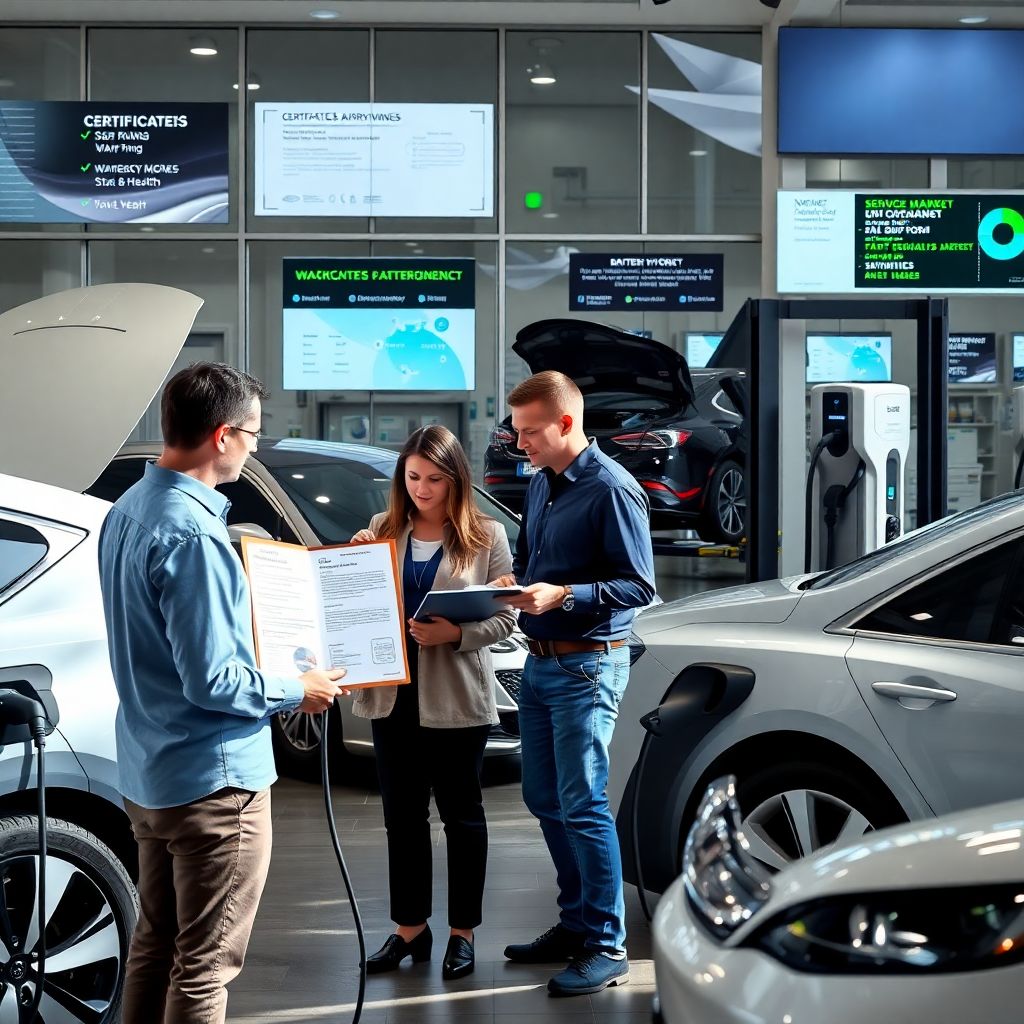
Buying a used electric or hybrid car has moved from niche curiosity to mainstream decision in barely a decade, yet many buyers still approach the process with the same mindset they use for traditional petrol vehicles, and that can be a costly mistake if they ignore battery health, software history, and charging compatibility. Today, a growing portion of the used‑car market consists of plug‑in hybrids (PHEV), full hybrids (HEV) and pure battery‑electric vehicles (BEV), and the rules of smart buying are subtly but decisively different, because the powertrain, the digital layer and the warranty structure introduce new kinds of risk and new opportunities for savings. In the early 2010s, stories circulated of first‑generation Nissan Leafs losing range dramatically and early plug‑in hybrids suffering from software glitches, shaping a perception that electric technology was inherently fragile, yet long‑term data from fleet operators and taxi companies has shown that well‑maintained EVs often outlast comparable combustion cars in key areas like brake wear, while the biggest variable remains the condition of the traction battery and the transparency of documentation. Expert buyers now say that, in addition to the classic trio of mileage, age and cosmetic condition, a fourth pillar has emerged for used electrified vehicles: verifiable digital records of battery care, charging patterns and software updates, which can mean the difference between a car that runs reliably for another decade and one that becomes a frustrating experiment in range anxiety.
In practice, a serious inspection of a used electric or hybrid starts with proposals and listings, moves through physical checks and document review, and ends with negotiation over warranties and after‑sales support, meaning that the very first decision is where to search and which platforms and publications to trust. Online classified giants such as AutoTrader in the UK, Autoscout24 in continental Europe and Autotrader.com or Cars.com in the United States now offer dedicated filters for EVs and hybrids, but the level of detail provided about battery health, remaining manufacturer warranty and charging hardware varies widely, so buyers should favor portals that disclose state of health figures or at least indicate whether an official battery health certificate is available from the dealer. Specialist EV‑only platforms and dealer networks, such as Carvana’s growing electric inventory in the US or dedicated sections on mobile.de in Germany, often impose stricter standards for listing cars, including mandatory documentation of scheduled maintenance and, in some cases, third‑party inspections, which can partly offset the higher asking prices. Parallel to the online portals, print and digital magazines such as What Car and Auto Express in the UK, Consumer Reports in the US, and Quattroruote in Italy have begun publishing annual or quarterly used EV and hybrid reliability rankings, and savvy buyers increasingly combine these editorial insights with the raw marketplace data to identify models and years that outperform their peers on durability and running costs.
When comparing electric and hybrid options across these different proposals, it becomes evident that each vehicle type demands a slightly different checklist, and buyers who treat them as interchangeable risk either overpaying or missing critical warning signs in the documentation. Full battery‑electric vehicles rely on one large traction battery pack whose degradation is influenced by temperature exposure, fast‑charging frequency and time spent at very high states of charge, while full or mild hybrids tend to use smaller batteries that are less stressed but more integrated into the vehicle’s overall electronics, making diagnosis trickier for non‑specialist mechanics. Plug‑in hybrids sit in between, offering meaningful electric range but also carrying the complexity of two parallel drivetrains, so their used value depends heavily on whether owners have treated them like proper EVs and plugged them in regularly or simply driven them as heavy petrol cars. Search engines like Google and Bing will happily return a mix of classified ads, dealer websites and enthusiast forums when users search phrases like “best used hybrid 2020” or “used electric car buying checklist,” but expert buyers stress the importance of prioritising sources that combine data with editorial scrutiny, such as independent magazines, as well as cross‑checking portal reviews with long‑term owner reports on specialist sites like InsideEVs, Green Car Reports and Electrek, which often highlight issues long before they become mainstream news. In effect, the safest approach is a triangulation: use big marketplaces to gauge prices and availability, turn to specialised EV sites and magazines for model‑specific strengths and weaknesses, and finally consult local forums or social media groups for real‑world experiences about charging infrastructure and dealer competence in your area.
Among all the factors that shape a safe purchase, the state of use and detailed service history are arguably the most misunderstood when it comes to electrified cars, because many buyers assume that fewer moving parts automatically mean less need for maintenance and record‑keeping. It is true that EVs do not require oil changes or complex timing belt services, and even many hybrids have simplified maintenance schedules compared with pure combustion cars, yet the regular checks they do need—such as brake fluid replacement, coolant for the battery thermal management system and inspections of high‑voltage components—are highly specialised and must often be performed by certified technicians to maintain warranty coverage. Buyers should insist on a chronological, stamped service book or a complete digital history, ideally printed by the manufacturer’s official network, showing that the car has followed the recommended mileage and time intervals; gaps in this chain are a red flag not only for mechanical neglect but also for potential warranty issues. Industry experts point to the example of early Toyota Prius and Honda Insight models that, in the 2000s, established a reputation for extreme reliability largely because taxi fleets and high‑mileage drivers scrupulously followed service schedules, whereas units with spotty maintenance histories often became the source of urban legends about expensive hybrid failures. In the modern context, fleet data from ride‑hailing and delivery companies using EVs like the Tesla Model 3, Hyundai Ioniq Electric and Renault Zoe indicates that well‑documented vehicles routinely cross 200,000 kilometres with only minor issues, reinforcing the message that state of use and verifiable maintenance matter more than age alone.
Closely tied to the service history is the chronology of technical inspections and formal maintenance milestones, often referred to as the tagliandi in many European markets, which serve as the backbone of a car’s life story and can reveal whether it has been treated as an asset to be preserved or as a disposable tool. Modern service invoices and inspection reports for electric and hybrid cars frequently include detailed checklists covering battery diagnostic results, software update logs, coolant system pressure, high‑voltage cable integrity and, in the case of plug‑in hybrids, the functioning of both the combustion and electric drivetrains under load. A thorough buyer will request not only the service book stamps but also copies of key invoices and test reports, paying attention to recurring warnings or advisories that might indicate a chronic problem, such as repeated mentions of rapid‑charging performance anomalies or warning lights related to the onboard charger. Veteran inspectors sometimes recount finding cars that appear cosmetically perfect but show irregularities in the recorded chronology—such as skipped scheduled services during the first years, followed by a sudden burst of recent visits—which can suggest earlier neglect hurriedly disguised before sale. Prospective buyers should also verify that mandatory periodic inspections, like the MOT in the UK, TÜV in Germany or state inspections in US jurisdictions, have been completed punctually, because delays or repeated failures can hint at underlying issues that a casual test drive might not reveal.
Another decisive layer in the decision‑making process is the structure of accessory warranties and extended protections, which play a particularly central role for electrified vehicles whose most expensive component is the battery, often covered separately from the rest of the car. Most mainstream manufacturers offer eight years or around 160,000 kilometres of warranty specifically on the high‑voltage battery, usually guaranteeing a minimum remaining capacity—commonly 70 percent—beyond which they will repair or replace the pack, and this is one of the strongest arguments for looking at relatively young used EVs that still fall within that coverage. Extended warranties, whether manufacturer‑branded or provided by third parties, can include or exclude high‑voltage components, so buyers must read the small print carefully and be wary of policies that focus only on conventional mechanical parts while explicitly excluding the traction battery and inverter, because these are precisely the components whose unexpected failure could render the car uneconomical to repair. Industry analysts note that certain brands, such as Toyota and Lexus, have built trust in the hybrid segment by offering additional battery coverage if owners perform annual hybrid health checks, while Tesla has relied more on long base warranties and over‑the‑air updates to fix software‑related issues, a strategy that underscores the new, quasi‑digital nature of vehicle ownership. Anecdotes from used‑car negotiations often feature scenarios where a seller highlights cosmetic add‑ons or infotainment upgrades while downplaying the lapse of the battery warranty by a few months, yet experts insist that, for EVs and plug‑in hybrids, the hierarchy of value is clear: structural warranties on the powertrain and battery should matter far more than superficial extras.
No less crucial, especially in a market where subsidies, fleet sales and cross‑border trade all exert influence, is the act of provenance and the legal chain that proves not only ownership but also the conditions under which the car has been used. A proper provenance file should include the original purchase invoice, registration documents, evidence of any leasing or company car agreements, and, where relevant, paperwork showing that incentives or tax breaks were lawfully applied and do not impose resale restrictions. In Europe, for example, some government subsidies require the first owner to keep the car for a minimum period, and a premature sale could hint at either exceptional use—such as ride‑hailing or car‑sharing duty—or at legal complications; in emerging EV markets, imported used vehicles may arrive with incomplete documentation that complicates warranty claims. Furthermore, the provenance check should include a search in national and international databases of stolen vehicles and total‑loss insurance write‑offs, because high residual values for certain electric models have already made them targets for theft and fraud. Lawyers specialising in automotive law recommend that buyers obtain a written declaration of mileage accuracy and accident history, alongside a certified report from services like Carfax in North America or HPI in the UK, to minimise the risk of hidden damage, and these precautions are especially pertinent for EVs whose battery packs might have been affected by collisions that left little external trace.
From a geographic perspective, choosing where to buy can be as important as what to buy, because the incidence of electric and hybrid adoption varies dramatically by region, influencing both availability and the competence of local operators. In northern Europe, countries such as Norway, Sweden and the Netherlands have some of the highest per‑capita EV ownership rates in the world, which translates into a relatively mature used‑vehicle market where specialised dealers, certified workshops and informed private sellers are commonplace, and where consumer protection agencies and journalists closely scrutinise industry practices. In western Europe, markets like Germany, France, the UK and Italy have seen steady rises in plug‑in and hybrid registrations, with hybrids often leading in southern regions where long‑distance motorway driving remains common and charging networks are still densifying; this creates a healthy stock of used hybrids from company fleets and private owners, often maintained within official networks. By contrast, in large parts of eastern and southern Europe, Latin America and parts of Southeast Asia, hybrid vehicles have gained a foothold more quickly than pure EVs, partly because they require no charging infrastructure, leading to an inventory skewed towards models like the Toyota Corolla Hybrid and Honda CR‑V Hybrid, where dealers and independent garages have accumulated substantial know‑how. In North America, the United States presents strong regional contrasts, with California and the north‑east corridor boasting dense EV and PHEV markets and a corresponding ecosystem of experienced operators, while central states still show a predominance of hybrids and a nascent but growing interest in BEVs, especially as charging corridors expand along major highways.
A closer look at regional figures also reveals where the most professional operators in the sector tend to cluster, and therefore where buyers might find the best combination of price, choice and after‑sales support. In Scandinavian capitals, specialist dealers frequently offer bundled services including home charger installation, battery health certificates, and flexible return policies, reflecting a consumer base that demands transparent and data‑driven transactions, and similar models are emerging in leading Chinese cities, where domestic brands dominate the EV market and after‑sales ecosystems are increasingly standardised. In western urban centres like London, Paris, Berlin and Milan, multi‑brand dealer groups have invested in dedicated electrified vehicle showrooms and service bays, and they often partner with energy utilities and charging providers to offer subscription‑based charging packages, an innovation that effectively extends the concept of accessory warranties into the energy domain. Meanwhile, in the United States, coastal metropolitan areas such as Los Angeles, San Francisco, New York and Seattle have become hubs for high‑volume used EV and hybrid trade, supported by a mix of franchised dealers and new online‑first retailers that promise reconditioning standards and transparent battery diagnostics, which independent experts applaud while cautioning that buyers must still verify claims. Analysts observe that in regions where adoption has accelerated rapidly, a second wave of enterprises has emerged, including independent EV‑focused workshops, mobile diagnostic services and app‑based vehicle‑history tools, all of which contribute to a more secure environment for purchasers provided they are used thoughtfully.
The comparative role of search engines, specialised magazines and online portals in guiding the final purchase decision cannot be overstated, because the information landscape around electrified vehicles remains fragmented and, at times, biased by marketing or ideological preferences. General search engines excel at breadth, quickly surfacing manufacturer brochures, user forums, news articles and dealer advertisements, but their ranking algorithms may prioritise paid content or highly search‑engine‑optimised pages that do not necessarily reflect independent quality, so buyers should cross‑reference top results with known neutral authorities. Specialised car magazines and consumer organisations bring testing laboratories, long‑term ownership surveys and expert reviewers to the table, enabling them to identify patterns such as battery degradation trends, common inverter failures or recurring software bugs across specific model years, and their data often underpins the residual‑value calculations used by finance houses and leasing companies. Online used‑car platforms, in turn, offer pricing transparency and vast choice, allowing buyers to sort by model, age, mileage, powertrain type and even colour, yet the quality of individual listings varies, and some operators have been criticised for inconsistent inspection standards or weak dispute resolution mechanisms. To navigate this, consumer advocates advise a layered approach: use search engines for initial orientation and vocabulary, follow up with specialised media for evidence‑based assessments, then rely on reputable portals—preferably those with published inspection protocols and return policies—for the actual transaction, and finally engage independent inspectors or trusted workshops for pre‑purchase evaluations, especially when dealing with high‑value electrified vehicles.
Ultimately, the decision between a used hybrid and a used fully electric vehicle is shaped by personal driving patterns, local infrastructure, regulatory incentives and the quality of available offers, but the underlying principle of a safe purchase is universal: informed scepticism guided by documentation and independent evidence rather than marketing claims or optimistic assumptions. Daily commuters with access to reliable home or workplace charging may find that a used BEV delivers the lowest running costs and the smoothest driving experience, provided that battery state of health is thoroughly checked and that the remaining warranty term aligns with their ownership horizon, while long‑distance drivers in areas with patchy charging networks may be better served by full or plug‑in hybrids from brands with a strong track record in electrified powertrains. Common myths—such as the belief that all EV batteries must be replaced after eight years or that hybrids are inherently unreliable due to complexity—are increasingly challenged by fleet data and independent testing, which show that degradation is gradual, highly model‑specific and often manageable with proper care, and that hybrid systems from experienced manufacturers can outlast their combustion‑only counterparts. As policymakers in Europe, North America and Asia tighten emissions rules and expand low‑emission zones, the residual value of well‑documented electric and hybrid vehicles is likely to remain robust, benefiting buyers who choose wisely today. For those entering the market now, a methodical approach that includes verifying state of use, examining the full chronology of maintenance, assessing accessory warranties, confirming clear provenance and leveraging the best regional operators and information sources can turn what seems like a technological gamble into a rational, secure and even rewarding investment in the future of mobility.